

Consistency is the quiet foundation on which every credible product proposition rests. A buyer who receives one flawless shipment and a defective follow-on has, in practical terms, no reliable product at all — and in globally distributed manufacturing, where components, sub-assemblies, and finished goods often originate from several factories across multiple regions, sustaining that consistency is far harder than sustaining it within a single plant.
Production support services have emerged as the discipline through which organisations translate a qualified specification into repeatable output, shipment after shipment, partner after partner.
The stakes are not marginal. According to McKinsey & Company research on manufacturing quality, the organisations that treat quality as a systematic capability — rather than a reactive inspection at the end of the line — consistently achieve higher output quality at lower total cost, with markedly reduced recall, warranty, and rework expense.
The lesson is that consistent quality is engineered into the production system, not caught at its exit.
This article examines how production support services deliver that outcome across a network of manufacturing partners: through structured factory oversight, independent inspection and verification, and a continuous improvement loop that prevents quality drift over time.
What Are Production Support Services?
Production support services are the coordinated engineering, quality, and compliance activities that sit between a finalised design and consistent, market-ready output.
They exist to close the gap where most production problems emerge — the point at which a specification that seemed clear on paper meets the realities of the factory floor, where instructions can be misinterpreted, tooling can produce out-of-tolerance parts, and quality standards can be applied inconsistently from one run to the next.
Rather than a single service, the term describes hands-on involvement at every critical stage of the production lifecycle. In practice, production support typically encompasses four connected areas of work:
Product engineering — translating design requirements into production-level instructions and supporting testing and refinement so that a specification is manufacturable at volume.
Prototype production — validating design, functionality, and manufacturability through early models and tooling review before full-scale production commits significant cost.
Product certification and compliance — identifying and obtaining the safety and regulatory approvals required for each target market, and managing the associated testing and documentation.
Quality management — providing structured oversight of supplier performance and driving the continuous improvement that keeps output consistent over time.
What unites these areas is continuity and accountability at the production stage — a sustained, on-the-ground presence that remote management alone cannot deliver.
Whether an organisation is launching a new line, scaling an existing one, or troubleshooting persistent quality problems, this is the layer of support that turns a capable factory into a dependable one.
The sections that follow examine how these functions work together to hold quality steady across an entire manufacturing partner base.
Why Consistency Fails Without Structured Oversight
Most quality failures in outsourced production are not the result of a supplier’s inability to meet specification. They arise from variance, the gradual divergence between what was qualified during sampling and what is actually produced at volume, months later, under commercial pressure.
Materials are quietly substituted, tooling wears, sub-suppliers change, and experienced operators move on. Each individual change may seem immaterial; in aggregate, they erode the very consistency a buyer is paying for.
This risk multiplies across a distributed supply base. Research from Deloitte’s manufacturing supply chain study highlights that leading organisations have shifted away from point-in-time supplier assessment toward continuous monitoring, precisely because a single annual audit cannot capture the drift that occurs between visits.
The same principle applies to production itself: oversight has to be ongoing rather than episodic if it is to hold quality steady across an entire manufacturing partner base.
Establishing that a partner is capable in the first place is a prerequisite rather than a substitute for oversight. The disciplines of structured supplier assessment and vendor qualification determine whether a factory can produce to specification; production support ensures it continues to do so at scale.
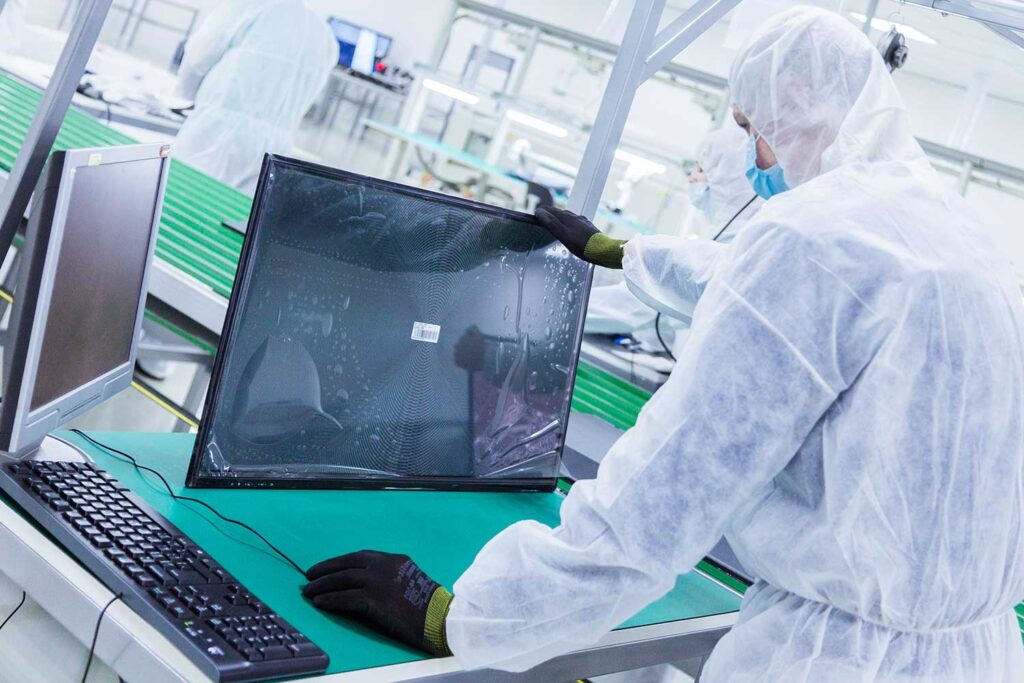
What Production Support Services Encompass
Beyond the definition above, production support is best understood in operation as a coordinated set of functions that run throughout the manufacturing cycle. Three of these carry the greatest weight in maintaining consistency across partners.
1. Factory Oversight and On-the-Ground Presence
The first function is direct factory oversight: a sustained presence at the point of production rather than remote reliance on supplier self-reporting. This is particularly consequential in electronics and other component-intensive categories, and it is the dimension of manufacturing outsourcing support that is most often underestimated when sourcing across regions such as Asia.
On-site oversight verifies that approved materials are being used, that documented work instructions are being followed, and that process parameters remain within qualified limits.
It also compresses the feedback loop: an issue observed on the line can be corrected in hours rather than discovered weeks later in a receiving inspection thousands of kilometres away.
For organisations working with a manufacturing partner in Asia, local presence bridges the time-zone, language, and cultural gaps that otherwise allow small deviations to go unreported.
2. Inspection and Quality Verification
The second function is objective inspection: the manufacturing QC services that generate independent evidence of conformity at defined control points.
Effective inspection is layered rather than confined to a single final check: incoming material inspection, in-process checks during production, and pre-shipment inspection against an agreed acceptable quality limit each catch different classes of defect before they compound.
Where products carry regulatory or performance obligations, inspection extends into formal verification. Independent third-party lab testing and product compliance confirms that output continues to meet the safety and performance standards it was certified against — a critical safeguard when production is running across several partners who may interpret a specification differently.
Aligning inspection criteria and compliance verification across the entire partner base is what converts a set of individually competent factories into a consistent supply.
3. Continuous Improvement
The third function turns oversight and inspection into lasting gains. Inspection data, non-conformance records, and root-cause analysis feed a structured improvement loop that removes the sources of variance rather than merely screening out their symptoms.
Sustained operational excellence shows that the durable value lies here: enhancing service and quality while reducing cost across the end-to-end value chain, sustained by leaders across the organisation so that gains persist rather than decay.
Manufacturing quality researches reach a similar conclusion, describing how the highest-performing sites embed quality into daily practice — through shop-floor huddles, shared metrics such as right-the-first-time production, and a culture in which quality is everyone’s responsibility rather than the quality department’s alone.
Applied across a partner network, continuous improvement is what prevents today’s corrected defect from becoming next quarter’s recurring one.
Ensuring Consistency Across Multiple Partners
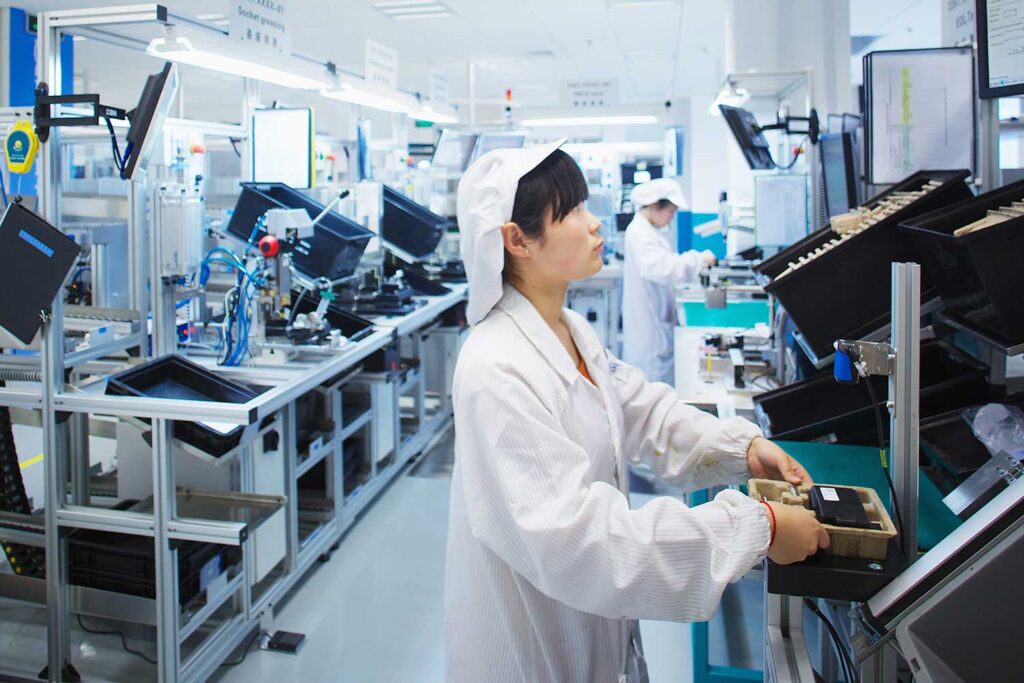
Coordinating quality across several factories introduces a challenge that single-site production does not: the same specification can yield materially different output in different hands. Consistency across partners therefore depends on standardisation of the mechanisms that govern quality, not just the specification itself.
In practice this means:
A common inspection protocol and shared acceptance criteria applied uniformly at every partner
Harmonised documentation so that a control plan means the same thing in every plant
Comparable performance metrics that allow partners to be measured on a like-for-like basis
Standardised production quality management makes divergence visible early — a partner trending toward the edge of tolerance can be addressed before it produces a non-conforming shipment.
Visibility is the connective tissue that holds this together. Consolidated, real-time insight into inspection results, corrective actions, and shipment status across the network allows quality to be managed as a portfolio rather than plant by plant.
The principles set out in supply chain visibility solutions apply directly to production oversight: without shared data, a multi-partner quality assurance supply chain reverts to a collection of disconnected relationships, each managed in isolation and each drifting on its own trajectory.
Embedding Support Early in the Production Lifecycle
The most effective production support is designed in from the outset rather than retrofitted once problems emerge. Decisions taken during design and industrialisation — how a specification is written, which control points are defined, how tolerances are set — determine how easily quality can later be held consistent at volume.
The transition from validated design to reliable series production is where many quality problems are either prevented or created, as explored in the discipline of prototype manufacturing and the path from idea to market.
Building oversight, inspection, and improvement into this early phase means that by the time production scales across multiple partners, the quality framework is already established, documented, and testable — rather than being assembled reactively under the pressure of a live order book.
Conclusion
Consistent quality across a network of manufacturing partners is not a matter of good fortune or of choosing the right factory once. It is produced by an ongoing system: factory oversight that keeps production faithful to specification, independent inspection that generates objective evidence of conformity, and continuous improvement that removes the sources of variance before they recur.
Production support services are the means by which that system is applied uniformly across every partner, so that consistency becomes the default rather than the exception.
In an environment where a single quality lapse can undo years of accumulated trust, that discipline is among the most valuable investments an organisation can make in its production strategy.
Need stronger oversight of your manufacturing network?
Talk to CSC Partners about how structured production support can help improve quality consistency, reduce production risk and strengthen supplier performance.
